Inclusion is often thought of as where a student sits.
Are they in the general education classroom?
Are they participating in group activities?
Are they present during instruction?
But true inclusion goes deeper than physical placement.
If a student cannot easily access communication during learning, they are not fully included — even when they are sitting right in the room. As educators continue building inclusive classrooms, it becomes clear that inclusion is not just about placement — it’s about access. As a speech-language pathologist, one of the biggest barriers I see isn’t willingness from teachers or peers. It’s that classrooms are often designed for one type of communication: fast verbal responses.
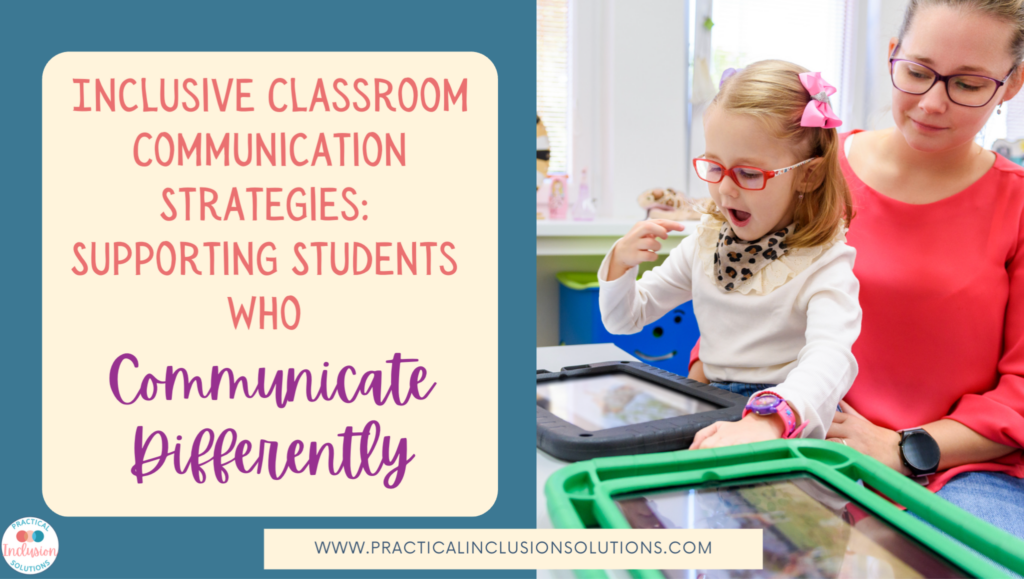
Many students communicate differently. Some use AAC devices. Some are deaf or hard of hearing. Some rely on visuals, gestures, or extra processing time. When we utilize inclusive classroom communication strategies in our classrooms, participation changes almost immediately.
The good news? These adjustments are often small — but incredibly powerful. Just as we’ve provided tips for keeping students motivated and ways to modify the curriculum for inclusive classrooms, here you will find inclusive classroom communication strategies for students who may communicate differently.
What Is Communication Access?
Communication access means students can:
- understand what is being said,
- express their ideas in ways that work for them, and
- meaningfully participate alongside peers.
Students who benefit from communication access supports may include:
- students who use AAC (augmentative and alternative communication) devices,
- students who are deaf or hard of hearing,
- students with language processing differences,
- multilingual learners,
- students with receptive and expressive language weaknesses,
- and students who need visual or structured support to participate.
When communication becomes accessible, learning becomes accessible too.
5 Classroom Practices That Instantly Increase Inclusion
These strategies don’t require special training or extra prep time — just small shifts in how participation is structured.
1. Provide Multiple Ways for Students to Respond
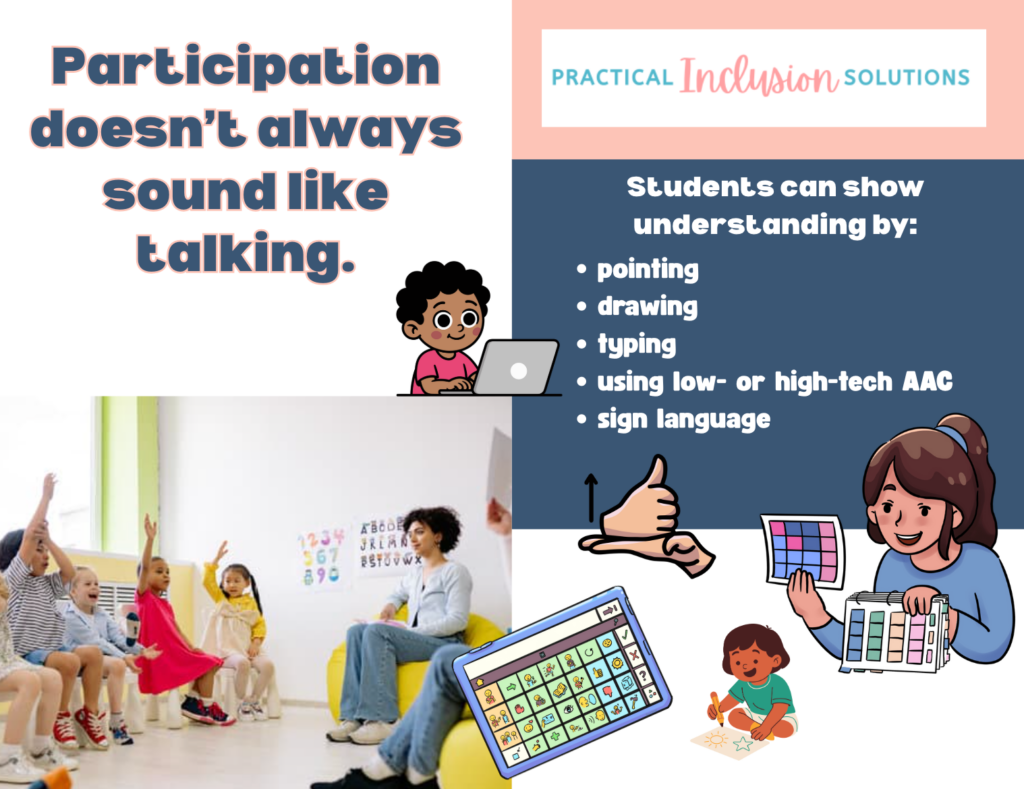
Many classrooms rely heavily on verbal participation. But speaking aloud is only one way to communicate.
Try offering options such as:
- pointing to an answer or selecting from visuals
- using sentence starters to help express their thought or idea
- typing or writing responses
- using AAC device or low-tech boards
- drawing ideas
Providing flexible participation options is one of the easiest ways to support students with varying communication and learning needs. We share additional ideas for adapting expectations in our post on practical inclusion strategies teachers can implement right away, especially for classrooms with diverse learners.
When response options expand, more students can show what they know — and confidence grows quickly.
2. Make Vocabulary Visible
Students cannot participate in discussions if key language disappears the moment it’s spoken.
Support understanding by:
- writing important vocabulary on the board
- pairing words with pictures or symbols
- previewing key terms before lessons
- keeping anchor charts visible during discussions
Visual supports are powerful tools not only for communication access but also for strengthening comprehension for many learners. You can find more classroom-ready ideas in our guide to supporting diverse learning styles through visual and instructional supports.
Visual language supports benefit AAC users and students who are deaf or hard of hearing — but they also help every learner process and retain information.
3. Build Intentional Wait Time
This may be the most powerful (and most overlooked) inclusion strategy.
Students who use AAC often need time to:
- locate vocabulary,
- motor plan button selections,
- and construct messages.
Students processing auditory information may also need extra seconds to interpret what was said before responding.
After asking a question, try silently counting to five before calling on someone or rephrasing. That pause communicates something important:
Everyone deserves time to think and communicate.
4. Structure Peer Communication
Peer interaction doesn’t automatically happen — it often needs scaffolding.
You can support communication by:
- providing sentence starters (“I agree because…”)
- assigning discussion roles
- using turn-taking visuals
- modeling how to wait for responses
- teaching peers to look at and listen to AAC devices
Structured collaboration benefits all students, especially when expectations are clear and communication is supported. If you’re looking for ways to make collaboration more successful, our post on making group work work for every learner shares simple systems teachers can start using immediately.
Structured interaction helps students communicate with peers rather than alongside them.
5. Normalize Communication Supports for Everyone
One of the most effective inclusion practices is making supports universal instead of individualized.
Consider:
- visual schedules
- written directions paired with verbal ones
- captions on videos
- gestures while speaking
- shared classroom visuals
When communication supports become part of everyday classroom routines, students feel included rather than singled out. Many teachers find success implementing these kinds of adjustments during classroom resets — something we explore further in our review and revitalize your classroom routines mid-year guide.
And often, teachers discover the entire class benefits.
An SLP Perspective: Communication Differences Are Not Ability Differences
One important reminder: communication differences do not reflect intelligence or understanding.
Students may know exactly what they want to say but need:
- more time,
- a different modality,
- or additional supports to express it.
Organizations like the American Speech-Language-Hearing Association emphasize that modeling slow, thoughtful communication — rather than pressuring faster responses — helps students develop stronger communication skills over time. Many communication supports also overlap with strategies that help students regulate and participate more successfully throughout the school day. You can explore additional classroom ideas in our resources focused on supporting student regulation and participation through inclusive practices.
When adults model patience, multiple communication methods, and respectful listening, peers follow that example.
And that’s when true inclusion begins to take shape.
Start Tomorrow: A Quick Communication Access Checklist
Try one or two of these this week:
✅ Write key vocabulary where students can see it
✅ Allow pointing, typing, or AAC responses instead of only verbal answers
✅ Pause 5 seconds after asking questions
✅ Preview new vocabulary visually
✅ Model how to communicate with students using AAC
✅ Provide written directions alongside spoken ones
Small adjustments can dramatically increase participation.
Where Communication Meets Inclusion
Inclusion isn’t just about being present in a classroom — it’s about being heard, understood, and able to contribute.
When we expand what communication looks like, we expand who gets to participate.
And often, the students who benefit most aren’t just those with identified needs — it’s the entire classroom community.
Because when communication becomes accessible, learning becomes accessible for everyone.
Continue Building Inclusive Classrooms
If you’re looking for more practical ways to support diverse learners, these resources from Practical Inclusion Solutions can help:
→ Supporting Diverse Learning Styles in Inclusive Classrooms
Learn how visual, auditory, and hands-on supports help students access instruction in meaningful ways.
→ Review & Revitalize: Refreshing Classroom Routines for Inclusion
Mid-year classroom adjustments that strengthen engagement, regulation, and participation.