Ever wish your students felt more confident tackling challenges instead of giving up? That’s where a growth mindset can change everything. In an inclusive classroom, helping students see effort as part of learning — not a sign of failure — can make all the difference. Just like when we explore diverse learning styles or build on positive behavior supports, fostering a growth mindset gives every student — including those with IEPs — the chance to thrive. Whether you teach general education or special education, small mindset shifts can lead to huge wins for learning and confidence.
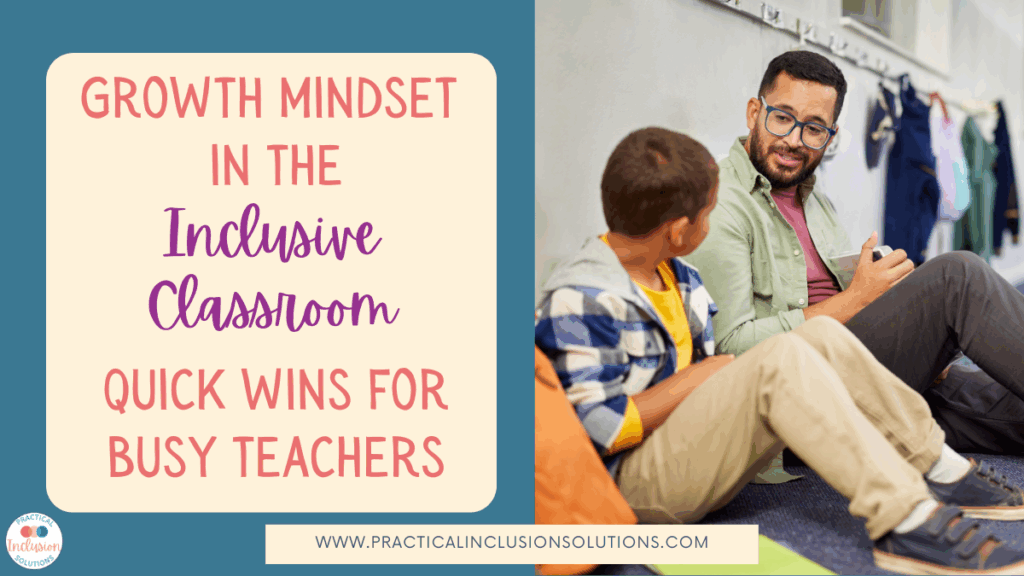
If you’ve ever heard a student say, “I’m just not good at math,” or “I can’t do this,” you’ve seen what happens when students fall into a fixed mindset. A growth mindset flips that script — it’s the belief that skills and intelligence can grow with effort, strategies, and support.
Here’s the best part: growth mindset isn’t just for neurotypical students or kids who already thrive academically. It’s for every learner. When we intentionally teach students to embrace mistakes, try again, and celebrate progress (not just perfection), we set them up for long-term success.
But let’s be real — teachers are already juggling a million things. The last thing you need is another initiative that feels like extra prep. The good news? You can build a growth mindset culture without adding more to your plate.
Here are five simple, effective ways to promote a growth mindset in your inclusive classroom — no fancy materials required:
1. Model Growth Mindset Out Loud
Students notice how we handle challenges. The next time your lesson doesn’t go as planned, try saying something like:
“Well, that didn’t go how I expected — I’ll try it another way next time.”
This models persistence and problem-solving in real time. Share moments when you had to practice something before you mastered it. For students with IEPs or learning differences, hearing that their teacher also struggles sometimes can be powerful reassurance.
2. Reframe Mistakes as Learning Opportunities
Instead of simply correcting errors, turn them into teachable moments:
- Say, “Great job catching that mistake — now we know what to fix!”
- Create a “favorite mistake” board (no names attached!) where you highlight a common error and work through it as a class.
This helps students see mistakes as part of the process — not something to be embarrassed about.
3. Celebrate Effort, Not Just the Outcome
Shift feedback from focusing on the final product to praising effort and strategy:
- “You kept trying different ways until you solved it!”
- “I can tell you really focused on sounding out that tricky word.”
For students with special needs, this approach reinforces personal growth rather than comparison with peers — and that builds motivation and confidence.
4. Use Growth Mindset Language Every Day
Small wording shifts can make a big difference.
- When a student says, “I can’t do this,” add “yet.” → “You can’t do this yet — let’s figure it out together.”
- Replace “That’s too hard” with “This will take some practice, but we can get there.”
Post a few growth mindset phrases around your classroom or near your whiteboard for a quick visual reminder — for your students and yourself.
5. Create Safe Opportunities to Try Again
Give students low-stakes chances to revisit and improve their work.
- Let them redo one math problem for partial credit.
- Allow revisions on a short paragraph or writing sample.
- During group projects, offer a chance to refine solutions after feedback.
This teaches that effort leads to improvement and that mistakes aren’t final — they’re just part of learning.
Small Shifts, Big Impact
Building a growth mindset classroom doesn’t require elaborate lessons or extra prep. By modeling persistence, reframing mistakes, and celebrating effort, you create a space where all students — regardless of ability — feel safe to learn, try, and grow.
Start small. Pick one of these strategies to try this week and watch how your students’ confidence shifts. You might even notice your own mindset growing too. 🌱
For more tips about increasing growth mindset in your classroom, check out these resources:
🧠 8 Teaching Strategies for Fostering a Growth Mindset